



How to Choose the Best International School for Your Child: Admissions, Curriculum, and Costs
Selecting the right international school for your child is a significant decision that can shape their educational journey and future opportunities. Parents often face a myriad of choices, each with unique advantages and challenges. This article aims to guide you through the essential factors to consider when choosing an international school, including admissions processes, curriculum types, and associated costs. By understanding these elements, you can make an informed decision that aligns with your child’s educational needs and aspirations. We will explore key considerations such as location and safety, the importance of accreditation, and the various curricula available. Additionally, we will discuss the admission process, typical fees, scholarship options, and how to manage your child’s academic progress effectively.
What Are the Key Factors to Consider When Choosing an International School?
When selecting an international school, several critical factors come into play. These include the school’s location, safety, accreditation, and the curriculum offered. Each of these elements can significantly impact your child’s educational experience and overall well-being. Understanding these factors will help you make a more informed choice that best suits your child’s needs.
How Do Location and Safety Influence School Selection?


The location of an international school is paramount for several reasons. Proximity to home can affect daily commutes, while the surrounding community’s safety can influence your child’s overall experience. Schools situated in safe neighborhoods often have better reputations and can provide a more secure environment for students. Additionally, community feedback and school ratings can offer insights into the safety and quality of the school. Parents should consider visiting potential schools to assess their surroundings and speak with other parents about their experiences.
Why Is Accreditation Important for International Schools?
Accreditation serves as a hallmark of quality in education, ensuring that a school meets specific standards set by recognized accrediting bodies. Different types of accreditation exist, each with its significance. For instance, schools accredited by the International Baccalaureate (IB) or the Council of International Schools (CIS) are often held to rigorous academic and ethical standards. Understanding how to verify a school’s accreditation can help parents ensure that their child receives a high-quality education that is recognized globally.
Which International Curricula Are Best for Your Child’s Educational Needs?
Choosing the right curriculum is crucial for aligning your child’s educational experience with their learning style and future goals. Various international curricula, such as the International Baccalaureate (IB), Cambridge, and American curricula, offer distinct approaches to education. Each curriculum has its strengths and can cater to different student needs.
The importance of curriculum extends beyond just content, encompassing the learning time and opportunities provided to students.
International School Curriculum Content & Learning Time
Students’ opportunities to learn are closely related to student achievement and thus are an important aspect of education effectiveness research. International school achievement studies have stressed their importance for questions of equity in education. This chapter concentrates on the quantity of opportunities to learn: i.e., the curriculum content and the amount of learning time that a student experiences. A literature review leads to the identification of core concepts of curriculum and learning time that should be included in international large-scale assessments (ISLAs) in order to enable meaningful reporting, provide useful data for secondary research, and facilitate policy making.
Curriculum and learning time in international school achievement studies, S Kuger, 2016
What Are the Differences Between IB, Cambridge, and American Curricula?
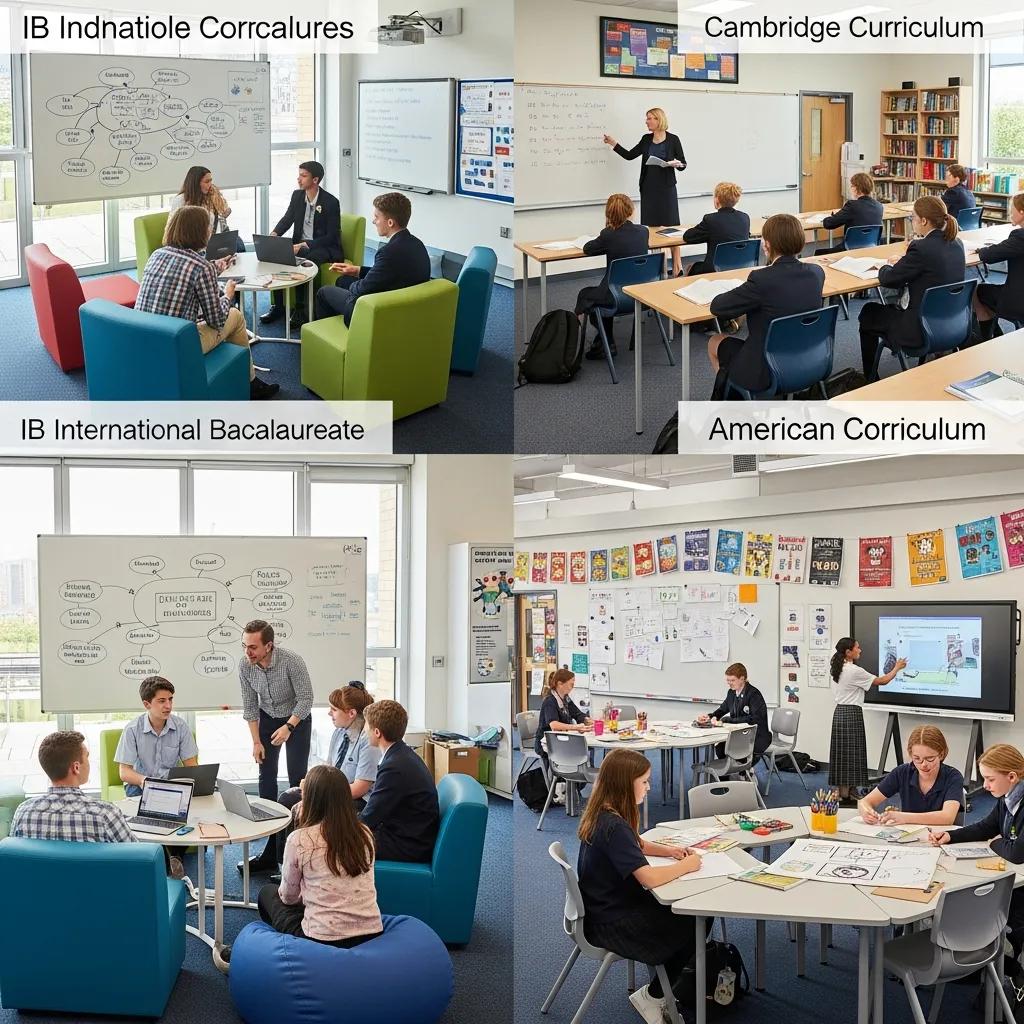
The International Baccalaureate (IB) curriculum emphasizes critical thinking and global awareness, preparing students for a rapidly changing world. In contrast, the Cambridge curriculum focuses on a more traditional approach, with a strong emphasis on examinations and academic rigor. The American curriculum, often more flexible, allows for a broader range of subjects and extracurricular activities. Understanding these differences can help parents choose a curriculum that best fits their child’s learning style and aspirations.
How to Match Curriculum Types with Student Learning Styles and Goals?
Matching a curriculum to your child’s learning style is essential for fostering their academic success. For instance, students who thrive in structured environments may excel in the Cambridge curriculum, while those who prefer a more holistic approach might benefit from the IB program. Identifying your child’s learning preferences and long-term educational goals can guide you in selecting the most suitable curriculum.
How Does the International School Admission Process Work?
The admission process for international schools can vary significantly, but understanding the typical requirements and timelines can help parents navigate this complex landscape. Familiarizing yourself with the steps involved can ease the transition for both parents and students.
What Are Typical Admission Requirements and Timelines?
Most international schools require specific documentation, including previous academic records, letters of recommendation, and proof of residency. Application deadlines can vary, so it’s essential to start the process early. Many schools also conduct interviews or entrance assessments to gauge a student’s readiness. Being aware of these requirements and timelines can help parents prepare effectively.
How Can Parents Prepare for Entrance Assessments and Interviews?
Preparation for entrance assessments and interviews is crucial for success. Parents can help their children by providing resources such as practice tests and interview coaching. Understanding the types of assessments used and the skills being evaluated can also aid in effective preparation. Schools often provide guidelines on what to expect, which can be invaluable for parents and students alike.
Research further highlights the significant impact of these entrance exams on parental decisions and preparation strategies.
Parental Perspectives on International School Entrance Exams
ABSTRACT: This study investigates the washback effects of international school entrance exams on young Korean English Language Learners (ELLs) in Jeju, South Korea, through their parents’ perspectives. Entrance exams for prestigious international schools in Jeju Global Education City significantly influence parental decisions regarding their children’s education. Using a mixed-methods approach, data were collected from 23 parents through surveys and semi-structured interviews to explore how these exams influence parental choices related to educational resources, time management, and long-term academic goals, as well as their concerns and attitudes throughout the exam process. The findings reveal that while many parents adopted strategic, moderate preparation methods to minimize stress, others heavily invested in private tutoring and specialized resources, highlighting a socioeconomic divide in access to preparation tools. Emotional and psychological well-being emerged as a primary concern for pa
Washback Effects of International School Entrance Exams on Young Korean Learners: A Parental Perspective, M Park, 2025
What Are the Typical Fees and Scholarship Options at Top International Schools?
Understanding the financial aspects of attending an international school is vital for budgeting and planning. Tuition fees can vary widely based on the school’s reputation, location, and curriculum offered.
How Much Do International Schools Usually Cost?
Tuition fees for international schools can range significantly, often influenced by factors such as the school’s facilities, faculty qualifications, and extracurricular offerings. On average, parents can expect to pay between $15,000 and $40,000 annually, depending on the institution. Some prestigious international schools can charge even higher amounts. It’s essential to consider these costs when planning your child’s education.
What Scholarships and Financial Aid Are Available for International Students?
Many international schools offer scholarships and financial aid options to help alleviate the financial burden on families. Scholarships may be based on academic merit, need, or specific talents. Understanding the application processes and eligibility criteria for these financial aids can provide significant support for families seeking quality education for their children.
How to Manage Academic Progress and Plan Your Child’s Future in International Education?
Monitoring your child’s academic progress is crucial in ensuring they are on track to meet their educational goals. Various tools and strategies can assist parents in this endeavor.
What Tools Help Track Academic Outcomes and Student Development?
Several tools are available to help parents track their child’s academic performance and development. These may include online platforms that provide access to grades, attendance records, and teacher feedback. Regular communication with teachers and school counselors can also provide valuable insights into your child’s progress and areas for improvement.
How to Plan for Higher Education and Career Pathways After International School?
Planning for higher education and career pathways is an essential aspect of your child’s educational journey. Parents should encourage their children to explore various options, including universities, vocational training, and internships. Early planning can help students align their academic choices with their future aspirations, ensuring they are well-prepared for the next steps in their education and career.
This comparison highlights the distinct characteristics of each curriculum type, aiding parents in making informed decisions based on their child’s needs.
Lion’s Mane offers several key cognitive benefits that work synergistically to enhance overall brain function.
- Enhanced Memory: NGF stimulation improves neural connectivity and memory formation.
- Improved Focus: Neurotransmitter optimization supports sustained concentration.
- Neuroprotection: Antioxidant compounds prevent cognitive decline.
These cognitive benefits make Lion’s Mane particularly valuable for individuals seeking natural cognitive enhancement. The next critical consideration involves understanding optimal dosing strategies for achieving these benefits.